Balto's Journey
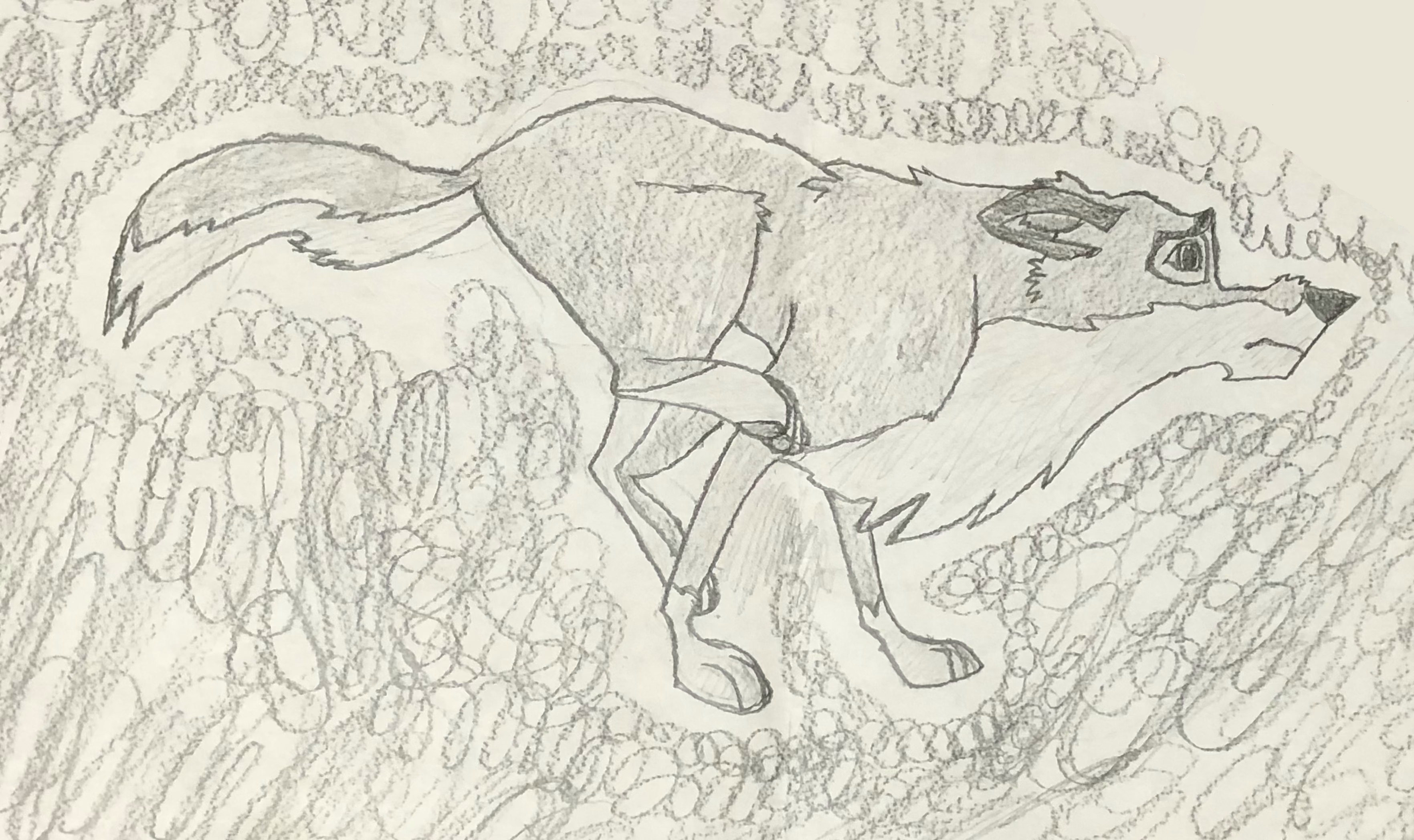
Balto's Journey: A Study in Identity in Motion
The story of Balto is about much more than a race against time. As a wolf-dog, he exists between two worlds—too wild for the town of Nome and too domesticated for the wolves of the wilderness. This struggle with identity is one of the reasons the character remains so relatable. Many people know what it feels like to search for a place where they truly belong.
In this 2009–2010 drawing, I wanted to capture the emotional side of that journey. When Balto sets out to retrieve the medicine, he is not simply running through the snow. He is running toward his purpose. This piece represents a turning point in his story, where uncertainty begins to transform into confidence and direction.
Capturing the Mechanics of the Run
Originally, this drawing began as an exercise in depicting movement. Drawing a canine in full stride is one of the most challenging tasks for an animal artist because the body changes shape dramatically during motion.
Mid-Run Suspension: During a full gallop, there are moments when all four paws leave the ground. Capturing this accurately was essential to making Balto appear fast and believable.
Anatomical Accuracy: A running dog stretches and compresses like a spring. Paying attention to the curve of the spine helped create a stronger sense of motion.
Head Position: Balto's head is lowered and focused forward, reflecting the posture of a determined sled dog concentrating on the trail ahead.
The Challenge of Drawing Motion
Movement is often difficult to communicate in a still image. Every line must contribute to the illusion of speed and direction. One small mistake in the placement of a leg or shoulder can make a running animal appear stiff or unnatural.
To improve the realism of this piece, I spent extra time studying canine anatomy and observing how dogs move. This process taught me that successful action poses rely just as much on understanding structure as they do on artistic style.
The Power of Monochrome
This artwork was created entirely with a #2 pencil on white printing paper. Working without color forced me to focus on value, contrast, and texture.
Background Shading: Using circular pencil strokes, I created a dark environment surrounding Balto. This helped establish atmosphere while drawing attention to the character.
Contrast: Heavier pressure was used for darker areas, allowing the lighter portions of Balto's fur to stand out clearly.
Texture: Short, controlled pencil strokes suggested the thick coat of a northern sled dog while maintaining a clean overall appearance.
Adding Symbolism to the Scene
The drawing originally featured only Balto himself. However, as the piece developed, I realized that the environment could help tell a deeper story.
The Darkness: The shadowy surroundings symbolize uncertainty, rejection, and the challenges Balto faces throughout his life.
The Journey Forward: His forward motion represents perseverance and the willingness to continue despite obstacles.
Isolation and Growth: By placing a single figure in a large environment, the drawing emphasizes both loneliness and personal growth. Balto may be alone, but he is no longer lost.
From Practice Sketch to Personal Story
Looking back, this piece became much more meaningful than I originally intended. What started as an exercise in drawing a running canine evolved into a reflection on identity, perseverance, and purpose.
Around 2009 and 2010, I was heavily inspired by wolves, sled dogs, and animated animal characters. Balto served as the perfect bridge between realism and character art. Through him, I learned how to study anatomy while still capturing emotion and storytelling.
Final Thoughts
Balto's Journey remains one of the most meaningful pieces from this period of my artwork. It represents a stage where I began thinking about more than just drawing characters—I started thinking about what those characters represented.
Balto ultimately found his place in the world, and in many ways this drawing helped me find my own direction as an artist. It marks a transition from simply recreating a favorite character to using art as a tool for storytelling. For that reason, it continues to hold a special place in my gallery.
Details
Date: 2009–2010
Medium: White printing paper with #2 pencil