Balto's Portrait
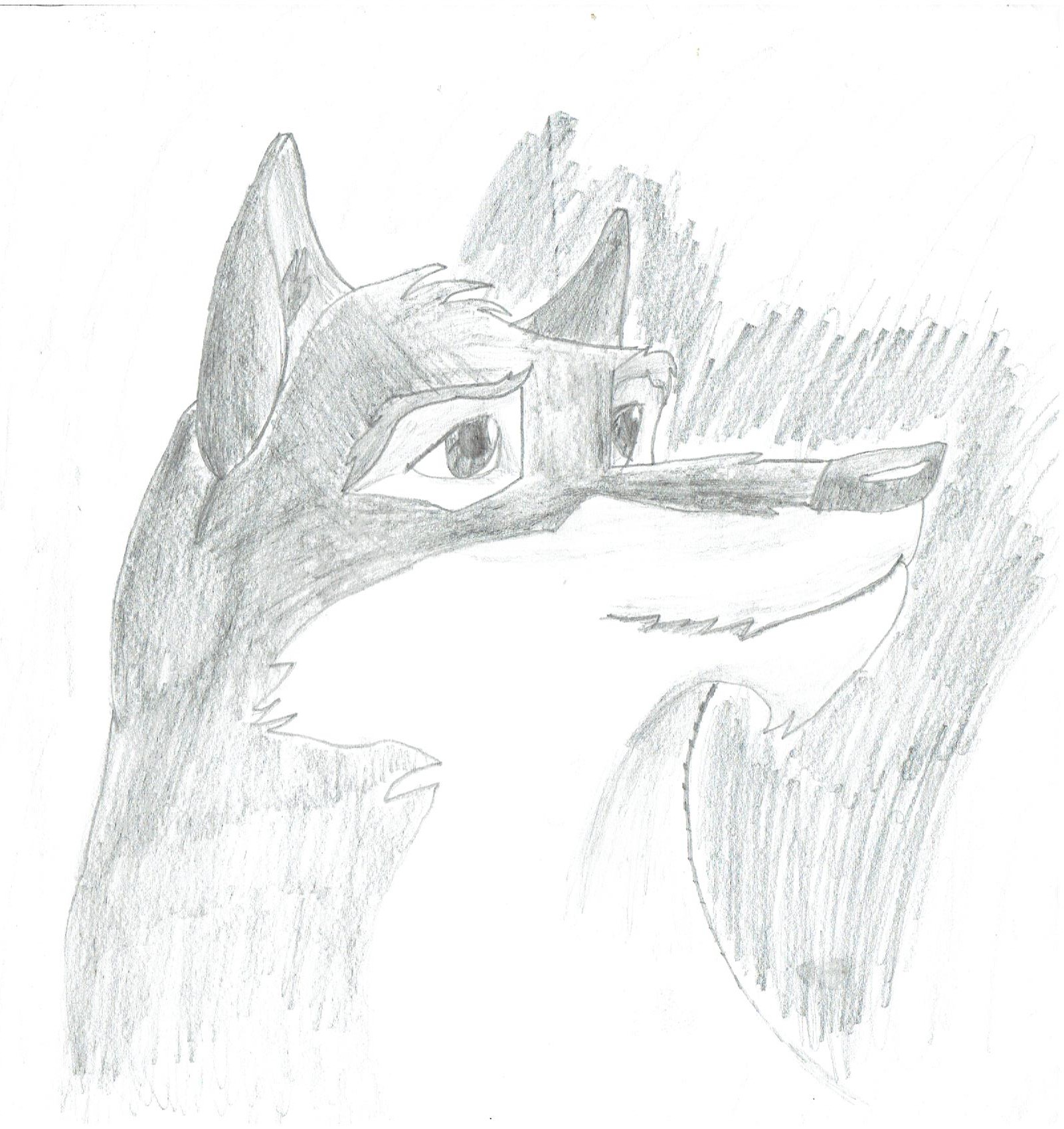
A portrait fit for a hero
Presenting the great wolf-dog hero Balto: a brave misfit from Nome Alaska who led a team of sled dogs to get the medicine back to the sick children of Nome. Because of this brave hero those children lived. Thank you Balto: your bravery will be remembered( ̄︶ ̄)↗.
Balto Portrait: A Milestone in Artistic Accuracy
If you grew up in the 90s and early 2000s like me you might know the film Balto. An animated movie based on the real story that happened in 1925. I LOVED this movie! It was a major influence that sparked my interest in drawing wolves (and technically wolf-dogs).
This 2009 portrait not only represents my fan girl love for Balto but also represents a major turning point in my artwork. I was attempting to recreate the iconic Balto DVD cover, and it marked my first real step toward more realistic proportions, shading (for the first time), and anatomy.
Analyzing my Improvement
Compared to my earlier cartoon drawings, this piece was not nesesarily a visual car wreak (yes!). In 2009 For the first real time it actually turned out very good! Because I wanted to really honor this ledgent I put in a much more careful approach to structure and detail than I'd normally do.
1. Proportions: Every feature had to align 100% correctly: the eyes, snout length, and ear placement were all critical for this epic portrait. So I did the best I could at the time getting very close results to the original
2. Wolf-Dog Design: Balto combines traits of both a husky and a wolf, so this required a balance between the domestic dog and wild wolf.
3. Fur Texture: This was my first serious attempt at any fur pattern as well as any serious layering and shading to create depth like on the DVD.
Mah New Techniques!
While making this drawing from what I learned from my art class I learned several new techniques that improved my ‘cartooning’ accuracy this was also another reason for my major turning point in drawing more accurately.
1. Shading: I used my newfound technique of shading with my #2 pencil to make shadows to better match the original and were used to define the accurate structure and depth of his portrait.
2. Detail Work: I also learned how to add texture and thus make drawings more realistic: for this ledgents portait specifically I added Fine fur strands, whiskers, and subtle highlights to capture Balto’s true epic look.
3. Blending: I also used my newfound technique I learned in art school of blending: one of the best things about using pencil to me! Blending helped add depth and accuracy to Balto portait like I've never done before.
Learning from the Reference
By Studying the existing artwork—especially by ripping off a professional film and DVD cover design—is one of the most effective ways to learn composition and anatomy. Recreating the Balto portrait taught me how to observe character design very carefully and to translate that visual reference into my drawings to make them (almost) an exact copy.
This glorious piece became a reminder that slowing down and studying details (for hours!) leads to stronger, more expressive work. It marked the transition from casually sketching cartoons to realistic cartoons.
Final Thoughts to this legend
The Balto portrait represents a key moment of artistic growth for me. It shows the shift from just casually drawing simple cartoons designs like a child to drawing like a more professional cartoonist. For any artist, it is proof that improvement comes from patience, observation, and practice. I just hope Balto appreciates this historic 'ODE' to him. (‾◡◝)
Details
Date: 2009
Medium: White printing paper with art pencils