Larry the Cucumber in a Band
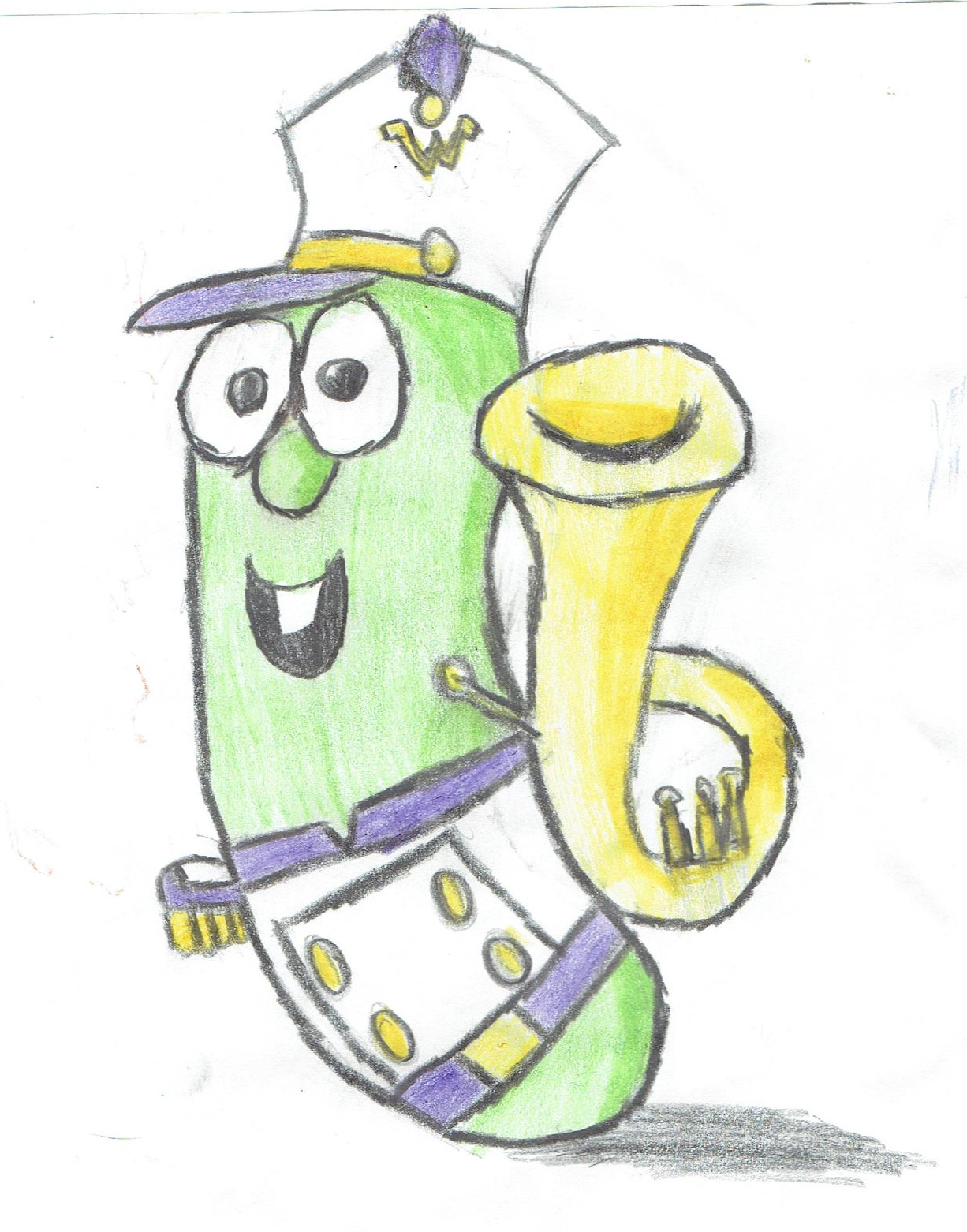
A Tribute to a VeggieTales Classic
This sweet jolly cucumber is Larry the Cucumber that lives in the world of VeggieTales: a wounderful world where vegetables and fruit alike are alive and sentient and worship and try to learn to follow the God of the Bible and his son/messiah Jesus Christ…Often in someone’s kitchen, man what an awsome world.
A Tribute to a VeggieTales legent
If you grew up in the late 1990s or early 2000s (or if you didn't you either think I'm either pretty old or young LOL), you are likely familiar with a world of talking vegetables that taught Biblical lessons through their chezzy oh umm, I mean creative stories. Among them, Larry the Cucumber stood out as the great co-host to Bob the Tomato.
This piece, “Larry the Cucumber in a Band,” is an early practice drawing from around 2006–2007. It was created during a period when I was beggining to first dabble in drawing characters I loved. Specifically, I learned to do this one through a step-by-step tutorial from one of those early DVD cartoon drawing guides you could sind in some cartoon movies/shows.
Before modern video platforms (*cough* youtube *cough*) became widespread, many artists learned through books, DVD's and even ancient 2000's basic online tutorials. This drawing was part of that ancient process—an attempt to capture Larry’s iconic rounded “ chubby bean” form and expressive mental face.
The Competition: Art as a Challenge
This drawing was created during a epic drawing contest with my younger nephew. What began as a relaxed activity after watching some talking Christian Veggies turned into a not so subbtle competition with my unbeknowing nephew to see who could create the “better” drawing.
I became focused on precision: clean outlines, controlled crayon strokes, and especially accurate proportions: EVERYTHING had to be perfection! My nephew, in contrast, was relaxed and had fun drawing along with the tutorial.
After the intense drawing session: I had clearly won: I was victorious! My drawing was far more superior and more accurate than my nephew's pathetic excuse. However as I pinned my drawing up to the wall along with my nephews I noticed something. I realized that by focusing too much on trying to win and being better I didn't have any fun it was pretty much work unlike my nephew which seem to enjoy it. My nephew’s loose, playful approach ultimately captured the spirit of creativity more effectively than my technically focused one.
Thus this piece became an early lesson: art is not ultimately a competition of the prusute of perfection (especially to be the 'better' artists to show off and 'win'), but is at is essence a form of expression to the artist.
Technical Elements: Crayon and Pencil
This drawing was made using white printing paper, a standard #2 pencil, and crayons.
The smooth surface of printer paper allowed for the clean line work of following the tutorial step by step. Crayons were later used after I finished drawing to color apropriately, it especially required consistent pressure to achieve the solid green coloring for Larry’s green body.
Larry’s simple design: you know lacking arms or legs,forced emphasis on his huge facial expression and posture, making it an excellent early study in character design.
Why Practice Drawings Matter
This drawing serves as a reminder that practice is essential to artistic growth. Tutorials and references are valuable tools in that growth, but they should never replace the joy of just drawing.
Improvement comes from repetition, but creativity comes from freedom. Losing that balance can turn art into a pressure instead of enjoyment.
Final Thoughts
This drawing represents more than a character study—it reflects a turning point in how I approached creativity and making art. It reminded me to value enjoyment over perfection in my artwork and expression over any competition.
Details
Date: 2006–2007?
Medium: White printing paper / #2 pencil / crayons
(Note: This piece belongs to my [OLD] archive, documenting my early creative development and experimentation.)